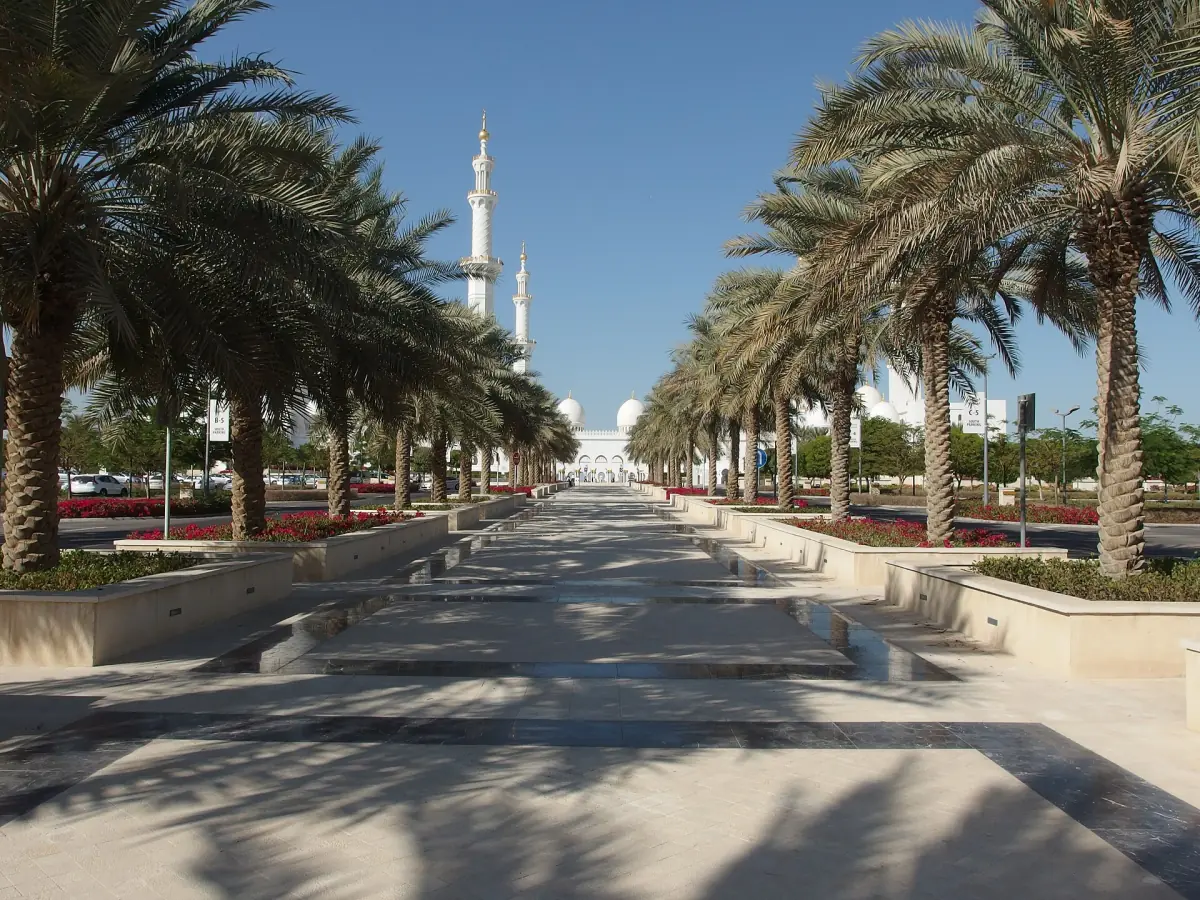
Sheikh Zayed Mosque facts at a glance
The Sheikh Zayed Grand Mosque is an active mosque and a cultural site in Abu Dhabi, the capital of the United Arab Emirates. It stands between the Maqta, Mussafah and Sheikh Zayed bridges, not in Dubai. Visitors of all backgrounds are welcome on the set visitor routes.
Most numbers below come with the thing they count, because the mosque is quoted in many ways. The grounds, the prayer halls and the whole complex are different measures. If you want the figures with a guide on site, see the free public cultural tours and private options on the Sheikh Zayed Mosque tours page.
Size and capacity
Which number counts which space.
| What is measured | Number | What it covers |
|---|---|---|
| Grounds | More than 555,000 m² | The whole site, not the building footprint |
| Raised ground | About 10 m | The mosque stands on elevated ground |
| Whole complex | About 41,000 to 55,000 worshippers | The range depends on how the space is counted |
| Main prayer hall | About 7,800 worshippers | The central hall under the large domes |
| Men's and women's halls | 1,500 each | Two separate prayer halls |
| Reflection pools | 10 pools, almost 7,000 m² of water | Rectangular, blue-tiled, around the building |
Do not read the capacity as a visitor limit. It describes prayer use, and tourists follow set routes from the visitor centre. For the whole complex, quote the range rather than one exact figure.
Our pick: a full day with a guided visit
A guide inside the mosque adds the background behind the numbers on this page.
Hand-picked tours, booked through GetYourGuide. Prices are indicative starting prices in US dollars (as of October 2026). Tap a tour for live availability and the current price in your currency.
Abu Dhabi tours and day trips
Guided visits and city tours in Abu Dhabi, with live prices and availability.
Architecture in numbers
Domes, minarets, columns and stone. More on the design is on the architecture page.
Domes
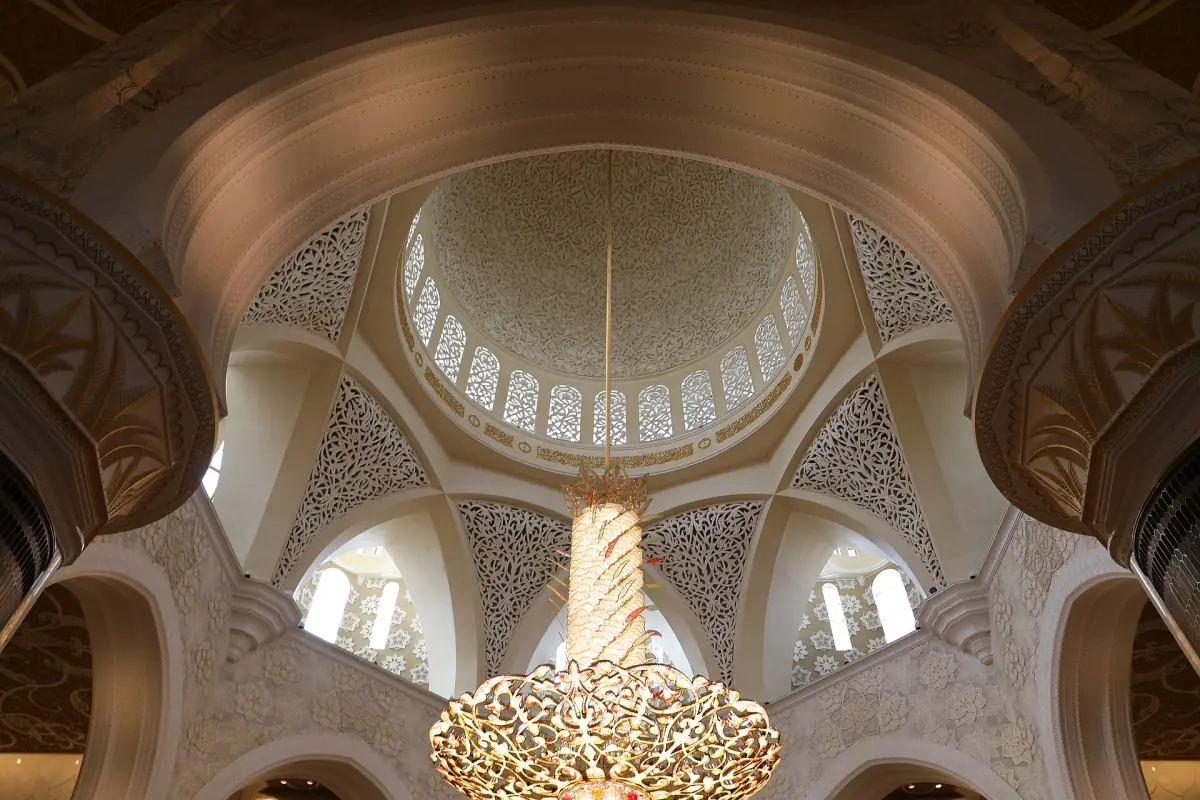
The mosque has 82 domes, and 14 more glass domes cover the washing areas. Count them apart. The main dome is about 32.6 m wide and 84 m high. The shapes show Moroccan and Mughal influence, with onion-shaped tops, white marble and gold-coloured glass mosaic at the crescent tips.
Minarets
Four minarets stand at the corners of the courtyard. Their height is given as about 106 to 107 m. Treat it as a round figure, not as a survey result.
Columns
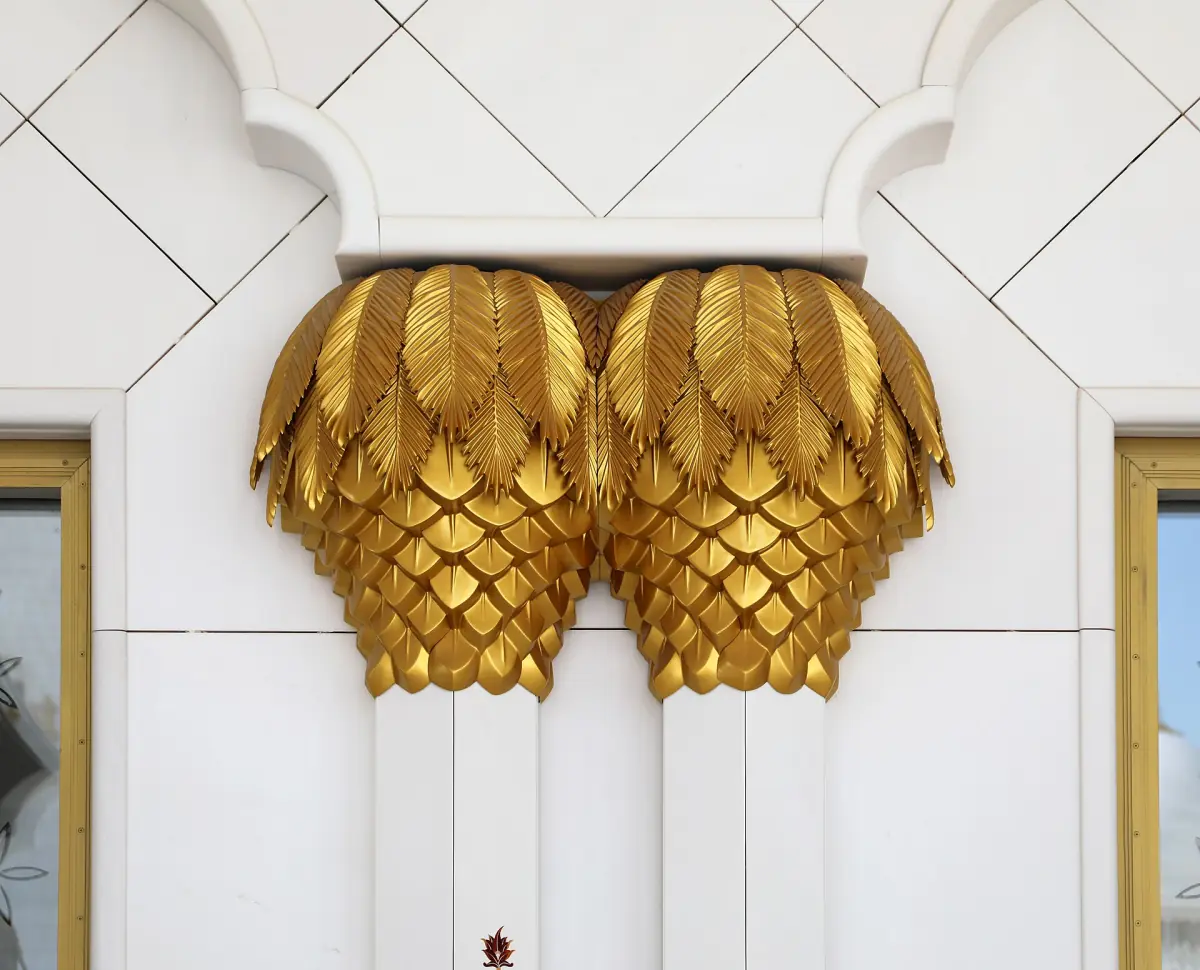
There are 1,096 hexagonal columns on the outside. They are clad in white marble with semi-precious stone inlay. The capitals are made of gold-coloured anodised aluminium, so they are not solid gold.
Marble and mosaic
More than 165,000 m² of marble from Macedonia covers the outer surfaces. Inside, much of the marble is Italian. The courtyard mosaic uses materials from Italy, India, Greece and China.
The carpet and the chandeliers
Interior figures. See inside the mosque for what you can see on the visitor route.
Carpet
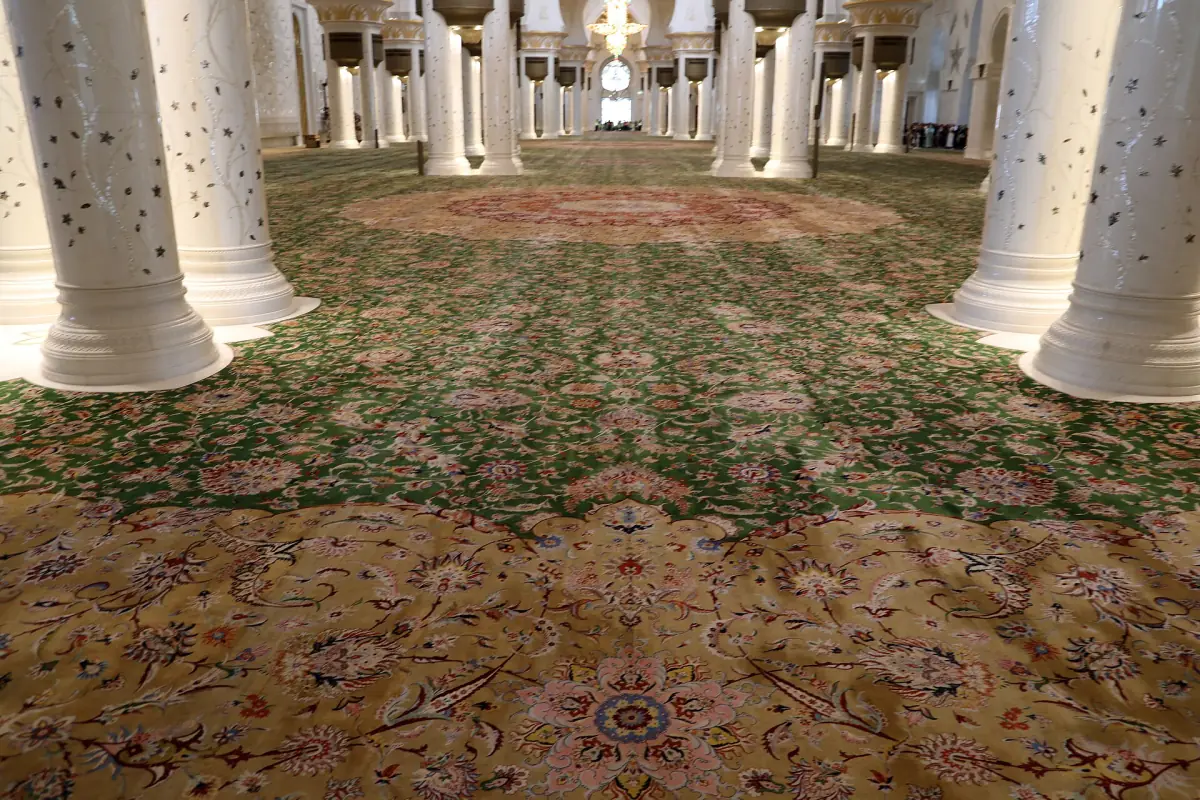
The hand-knotted carpet covers about 5,400 m² and weighs 35 tonnes. Up to 5,700 m² is quoted. It is about 70 percent wool from New Zealand and 30 percent cotton, and it was sewn together on site from 9 pieces. About 1,200 craftspeople worked on it for roughly 2 years, including design and knotting. It carries a Guinness World Records entry from 2007 as the largest hand-knotted carpet.
Chandeliers
There are 7 in total, 3 under the domes of the main hall and 4 smaller ones in the foyers. They are gold-plated stainless steel with 24-carat plating and Swarovski crystals, and the date palm is the design motif. The largest is 12 m wide and 15.5 m high with 15,500 LEDs.
Lighting at night
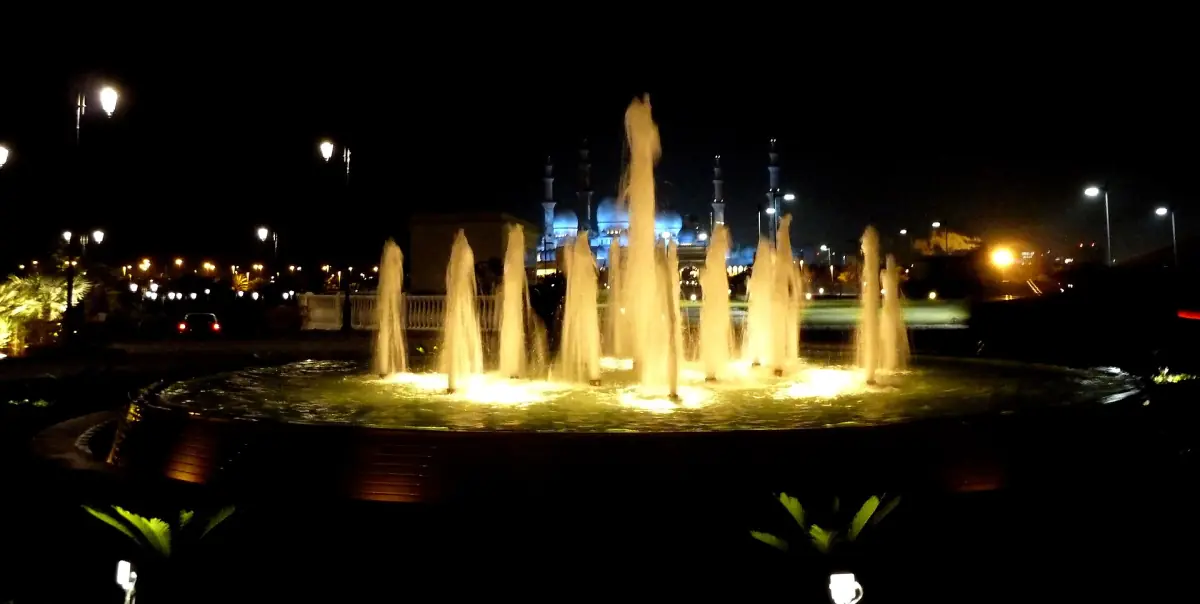
The facade and domes are lit with more than 840 light units. Another 22 light towers carry 10 to 13 projectors each. The blue light follows the lunar cycle, so it is dimmer in the early days of the lunar month and brighter toward full moon. See the mosque at night.
Dates and people behind the numbers
The short version. The full story is on the history page.
Construction
Building began on 5 November 1996. The inner prayer halls first opened for Eid al-Adha in 2007, after about 11 years of work.
Workforce
More than 3,000 workers and 38 construction companies took part, with materials and craft from several countries.
Name
The mosque carries the name of Sheikh Zayed bin Sultan Al Nahyan, founder of the UAE, who lived from 1918 to 2004.
Visitor numbers you need
Prices and times for 2026.
| Topic | Detail |
|---|---|
| Regular opening hours | 09:00 to 20:30, last entry 20:00, every day except Friday |
| Friday | 09:00 to 11:30 (last entry 11:00), then 14:30 to 20:30 (last entry 20:00) |
| Entry fee, foreign visitors | AED 10; Emirates ID holders AED 5; guests via a tour operator AED 8 |
| Public cultural tours | Free, 30 to 45 minutes, in English and Arabic, 11:00, 13:00 and 17:00 (Friday 11:00 and 17:00) |
Check the current fee when you register. Details are on the tickets page and the opening hours page. For most visitors, one afternoon visit with a free public tour covers the numbers above.
Sheikh Zayed Mosque facts: frequently asked questions
How big is the Sheikh Zayed Mosque?
The grounds cover more than 555,000 m². The main prayer hall holds about 7,800 worshippers, and two further halls hold 1,500 each. Grounds and halls are different measures, so do not compare them directly.
How many people can it hold?
For the whole complex, figures range from 41,000 to 55,000 worshippers. The main hall alone holds about 7,800.
How many domes and minarets does it have?
There are 82 domes and 14 glass domes over the washing areas, plus four minarets of about 106 to 107 m.
Is it the largest mosque in the world?
Sizes are measured in different ways, so rankings change with the measure. A safer statement is that it is one of the largest mosques, with grounds of more than 555,000 m².
Is entry free?
Public cultural tours are free. For general entry, foreign visitors pay AED 10, Emirates ID holders AED 5 and guests via a tour operator AED 8 in 2026. Check the current fee when you register.
Is this the official Sheikh Zayed Mosque website?
No. This is an independent guide. It is not run by the mosque or any authority, so check opening times and fees at the visitor centre or when you register.